AI Chat Windows Transform Developer Workflow in 2024
Discover how AI chat assistants replace search stacks, streamlining coding, debugging, and learning for modern developers.

How AI Chat Windows Are Rewriting the Developer’s Workflow
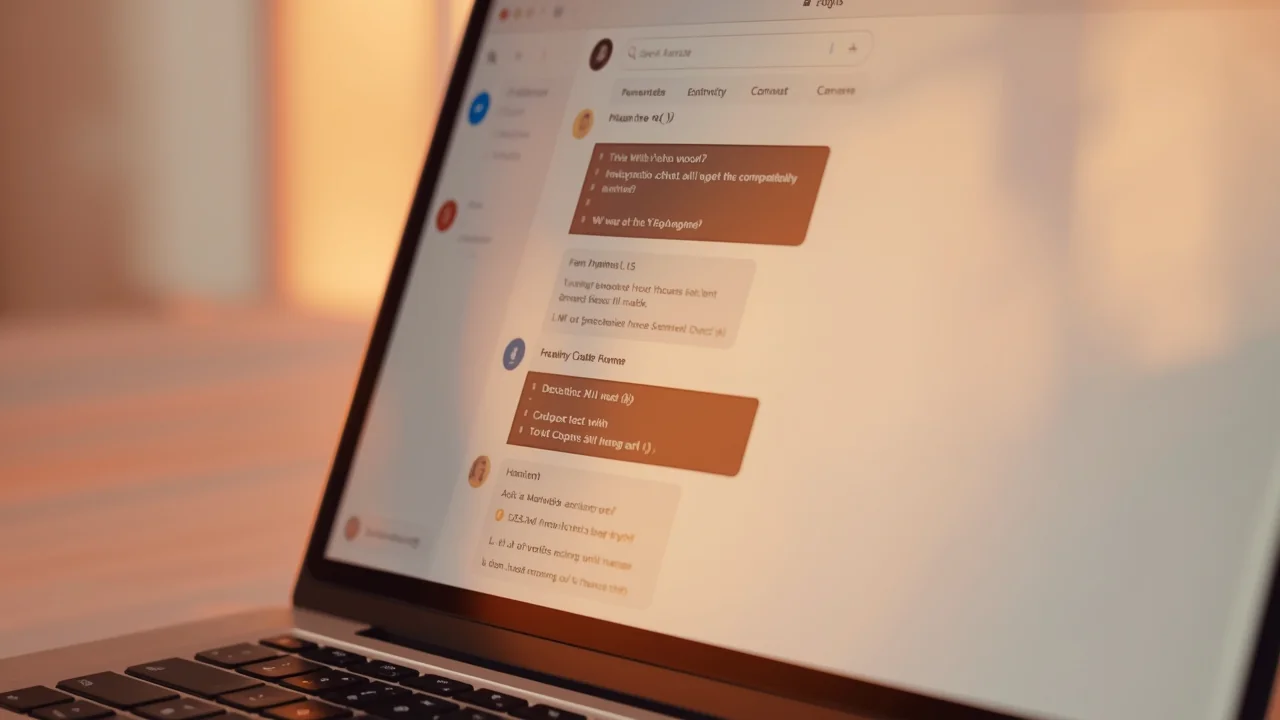
When I opened Chrome this morning, my tab bar looked like a conversation log with Claude, Gemini, and a handful of other LLMs. No longer do I see a mosaic of Stack Overflow threads, MDN pages, or endless GitHub issues. The shift is subtle enough that many of us haven’t fully processed what it means for our craft, our learning habits, and the future of the developer community.
From “Search‑and‑Sift” to “Ask‑and‑Receive”
Four years ago a typical debugging session resembled a scavenger hunt:
- Identify the problem → craft a precise Google query.
- Wade through Stack Overflow (often answers from 2014‑2016).
- Cross‑reference blog posts and official docs.
- Copy‑paste snippets, tweak them, and keep the tabs open for days in case you need to revisit the reasoning.
Documentation was the holy text. You’d spend hours parsing API references, mentally mapping generic examples to your specific use case, and building a mental model of the library’s quirks.
Fast forward to today. The workflow now feels more like a live pair‑programming session with an omniscient teammate who has already read every relevant doc:
- Open a chat with Claude, Gemini, or another LLM.
- Describe the feature you’re building.
- Iterate through follow‑up questions, trade‑off discussions, or edge‑case clarifications.
- Receive a ready‑to‑run implementation that’s already tailored to your context.
The result is the same—a working piece of code—but the journey has changed from “search‑and‑sift” to “ask‑and‑receive”.
“The knowledge transfer happened through conversation, not documentation.” – the original author
What We’re Overlooking in the Hype
The tech press loves to tout the productivity boost: “Ship faster, ship more.” That’s the headline, but the deeper implications are getting lost in the noise.
Learning Becomes Conversational, Not Archival
- Conceptual focus: Instead of memorizing syntax, we’re now learning higher‑level patterns while the AI fills in the boilerplate.
- Memory off‑loading: The AI handles edge‑case nuances, freeing mental bandwidth for architecture and design decisions.
New Dependency Risks
- Tool availability: Our entire workflow now assumes continuous access to LLMs. If the service goes down or your budget runs out, can you still solve problems?
- Skill erosion: Relying on AI for “how‑to” questions may blunt the ability to read and interpret raw documentation—a skill that historically forged resilient engineers.
The Social Cost of Isolated Tabs
The old tab bar was a community map—a collection of shared pain points and collective wisdom. Those 47 Stack Overflow tabs weren’t just research; they were a window into the struggles of thousands of developers. Today, each tab is a private dialogue with a model, potentially increasing productivity but also reducing the sense of belonging to a broader knowledge ecosystem.
The Uncomfortable Questions We Need to Ask
The transition feels inevitable, but it forces us to confront a set of uneasy queries:
- Am I becoming a better developer or a better prompt engineer?
- When an AI explains a concept, do I truly understand it, or am I just trusting the output?
- What happens to the next generation of developers who never learn to wrestle with raw documentation?
These aren’t rhetorical; they shape hiring practices, onboarding processes, and the very definition of “technical competence”.
A Historical Lens: Every Generation Faces an Abstraction Leap
Remember when assembly programmers scoffed at high‑level languages? Or when Java veterans dismissed frameworks that “did too much magic”? Each era has resisted a new abstraction layer before eventually embracing it. AI assistance may simply be the next step in that evolution—an abstraction that moves the manual labor of information retrieval into a conversational interface.
But there’s a subtle difference: the speed at which LLMs have been adopted is unprecedented, and the breadth of their influence (spanning design, architecture, and even project management) is broader than past shifts.
Skills That Matter in the AI‑Augmented Era
Based on the observations from the original article and the emerging consensus across the community, the skill hierarchy is reshaping itself.
Skills That Are Becoming Less Critical
- Memorizing syntax – You can ask the model for the exact method signature in seconds.
- Recalling every edge case of a library – LLMs can surface obscure pitfalls on demand.
- Perfect recall of API methods – Searchable AI replaces mental indexes.
Skills That Are Gaining Importance
- Crafting precise prompts – The ability to ask the right question determines the quality of the answer.
- Critical evaluation of AI output – Not every generated snippet is production‑ready; you must audit for security, performance, and correctness.
- Understanding trade‑offs and system design – AI can suggest implementations, but you decide which architecture fits your constraints.
- Judging when to trust the model – Knowing when to dig deeper, verify with official docs, or run additional tests is essential.
These shifts echo the broader move from “knowing everything” to “knowing what you don’t know and how to acquire it fast”.
Practical Tips for Teams Transitioning to AI‑First Workflows
Blend AI with traditional sources
- Use LLMs for rapid prototyping, but still keep a habit of cross‑checking against official documentation for edge cases and version‑specific behavior.
Document prompts and outcomes
- Treat a successful AI interaction as a reusable artifact. Save the prompt, the model’s response, and any follow‑up refinements in a knowledge base for future reference.
Create “AI‑review” checkpoints
- Before merging AI‑generated code, enforce a peer review that focuses on security, performance, and alignment with architectural guidelines.
Invest in prompt engineering training
- Offer workshops that teach developers how to structure queries, specify constraints, and iterate effectively with LLMs.
Maintain a “human‑first” learning path
- Encourage junior developers to spend a set percentage of time reading raw docs or exploring community Q&A without AI assistance, preserving the depth of understanding that comes from wrestling with ambiguity.
Looking Ahead: The Playbook Is Still Being Written
We are the first generation of developers living through this AI‑driven transition, writing the playbook in real time. Some of us thrive, some remain skeptical, and most sit somewhere in the middle—curious, cautious, and constantly adapting.
The tabs in our browsers may have turned into conversation logs, but the underlying goal remains the same: turning ideas into functional, reliable software. The tools have changed; the craft still demands curiosity, rigor, and a willingness to question the output we receive.
“The way we work has completely changed, and we’re still figuring out what that means.” – the original author
As we navigate this uncharted territory, the most valuable compass may be the very questions we’re now asking ourselves.

Share this insight
Join the conversation and spark new ideas.