China’s ‘Stargate’ Strategy: Transforming Global AI Infrastructure
China consolidates data centers, expands compute, and moves AI inference closer to users, reshaping hardware, talent pipelines, and global collaboration.

How China’s “Stargate” Strategy Is Redefining the Global AI Landscape
China isn’t just throwing money at AI research labs; it’s rewiring the very hardware that powers every chatbot, image generator, and recommendation engine. The country’s “Stargate of China” plan—an ambitious, state‑driven effort to consolidate fragmented data centres, boost compute capacity, and push inference closer to users—is already showing measurable results. For agencies building AI‑powered products, the shift has concrete implications for architecture, talent pipelines, and cross‑border collaboration.
From Rice Paddies to Megaclusters
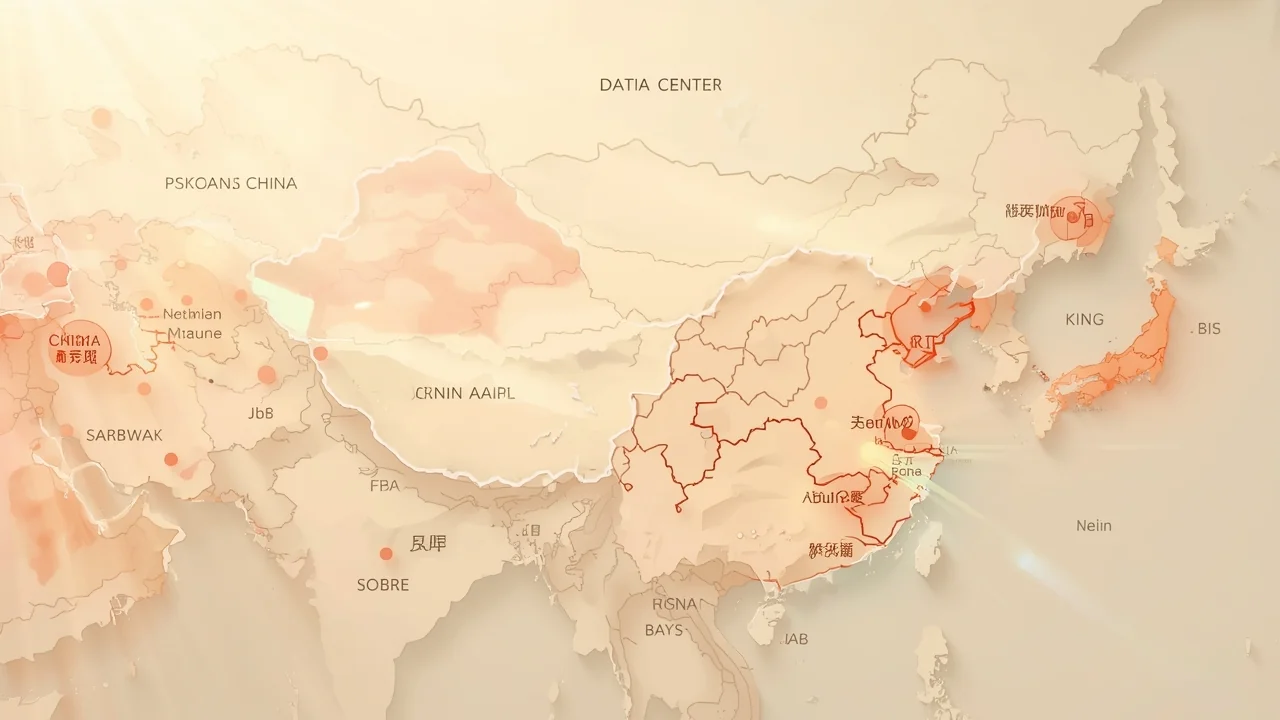
On a 760‑acre island in the Yangtze River basin, former rice fields are being transformed into a sprawling server farm. The Wuhu “mega‑cluster” is part of a broader push to centralise AI compute, mirroring the $500 billion U.S. “Stargate” initiative but on a distinctly Chinese scale. While the Chinese cluster won’t match the sheer size of its American counterpart, it serves as a flagship for a systematic overhaul of the nation’s data‑centre ecosystem.
Key points:
- Geographic consolidation – Remote western data centres are earmarked for training massive language models, while new facilities near population hubs focus on “inference,” the real‑time generation of AI outputs.
- Resource efficiency – By tightening oversight, Beijing aims to squeeze more performance out of existing hardware, a response to the fact that the U.S. currently holds roughly 75 % of global AI compute versus China’s 15 %.
Why Compute Centralisation Matters to Developers
Most web‑focused AI services today rely on a “cloud‑first” model: you send a request to a remote API, the provider runs the model on a GPU farm, and you get a response. China’s plan flips part of that equation:
- Edge‑proximate inference – Locating inference nodes closer to end‑users cuts latency dramatically, a boon for real‑time applications like interactive chat widgets or AR filters.
- Standardised hardware stacks – Government‑mandated oversight pushes vendors toward uniform GPU/ASIC specifications, simplifying cross‑project integration and reducing the need for custom driver work.
- Cost incentives – The state is rolling out “AI computing vouchers” for startups that adopt domestic hardware, effectively subsidising the per‑token cost of running large language models.
For agencies, this translates into a new set of trade‑offs: you can achieve sub‑100 ms response times for Chinese users, but you may need to adapt your pipelines to the specific AI chips that dominate the local market (e.g., Huawei’s Ascend series or Alibaba’s Hanguang).
Talent, Training, and the “Genius” Pipeline
Beyond bricks‑and‑mortar, China’s AI surge is powered by a deliberately cultivated talent pipeline. High‑school programs now funnel top students into accelerated AI curricula, creating a “genius class” that can prototype models faster than many Western research groups. This talent boom is feeding the rapid rollout of proprietary models, many of which are openly available through Chinese cloud marketplaces.
Practical takeaways:
- Open‑source alternatives – Platforms like ModelScope host Chinese‑trained models that can be fine‑tuned on modest hardware, offering a low‑cost entry point for agencies targeting the Asia‑Pacific market.
- Collaboration pathways – Joint‑venture labs between Chinese universities and multinational firms are becoming a common route to access both talent and compute resources.
The Geopolitical Cost Curve
The AI race is not just a technical competition; it’s a geopolitical chess game. While the U.S. “Stargate” initiative is framed around national security and a “worker‑first” AI governance model, China’s version leans heavily on sovereign data policies and state‑backed financing. The divergent philosophies affect everything from data residency requirements to export controls on AI chips.
For web agencies, the fallout shows up in three ways:
- Regulatory compliance – Projects handling personal data of Chinese citizens must now obey the Cybersecurity Law and the newer Data Security Law, which mandate local storage and government‑approved processing pipelines.
- Supply‑chain risk – Reliance on domestically produced ASICs reduces exposure to U.S. export bans but introduces its own vulnerabilities, such as limited third‑party tooling and firmware transparency.
- Market access – Companies that align early with China’s AI standards can tap into a market projected to exceed $30 billion in AI services by 2027, according to industry forecasts.
Building Future‑Ready AI Products
So, how should a modern web development agency adapt?
- Hybrid architecture – Deploy inference layers on both global clouds (AWS, Azure) and Chinese edge clusters. Use a routing layer that directs traffic based on latency and compliance constraints.
- Container‑native AI runtimes – Embrace OCI‑compatible containers for model serving (e.g., TensorRT‑in‑Docker) to ensure portability across heterogeneous hardware.
- Observability at the compute layer – Implement metrics that capture GPU utilisation, memory bandwidth, and power consumption, especially when operating on Chinese ASICs where traditional tooling may be scarce.
- Talent exchange programs – Partner with Chinese universities for internship pipelines; the “genius class” graduates bring fresh perspectives on model optimisation that can shave milliseconds off response times.
Common Pitfalls to Avoid
- Assuming parity of hardware – Not all GPUs are created equal. A model that runs at 30 fps on an NVIDIA A100 may stall on an Ascend 910 without kernel tuning.
- Over‑reliance on subsidies – Voucher programmes can be fickle; design your cost model to survive the eventual phase‑out.
- Neglecting data sovereignty – Storing user prompts in a foreign data centre can trigger legal challenges and erode user trust.
The Road Ahead
China’s “Stargate” plan is still in its early phases, but the momentum is undeniable. By consolidating compute, nurturing a pipeline of AI prodigies, and leveraging massive state funding, the country is reshaping the global AI supply chain. For agencies that can navigate the technical and regulatory nuances, the payoff is a faster, more cost‑effective AI stack that serves billions of users.
Bottom line: Treat China’s AI infrastructure not as a distant curiosity but as a parallel ecosystem that will increasingly intersect with global development workflows. Align your architecture, talent strategy, and compliance posture now, and you’ll be ready when the next wave of AI‑driven products rolls out of the Yangtze valley.


Share this insight
Join the conversation and spark new ideas.